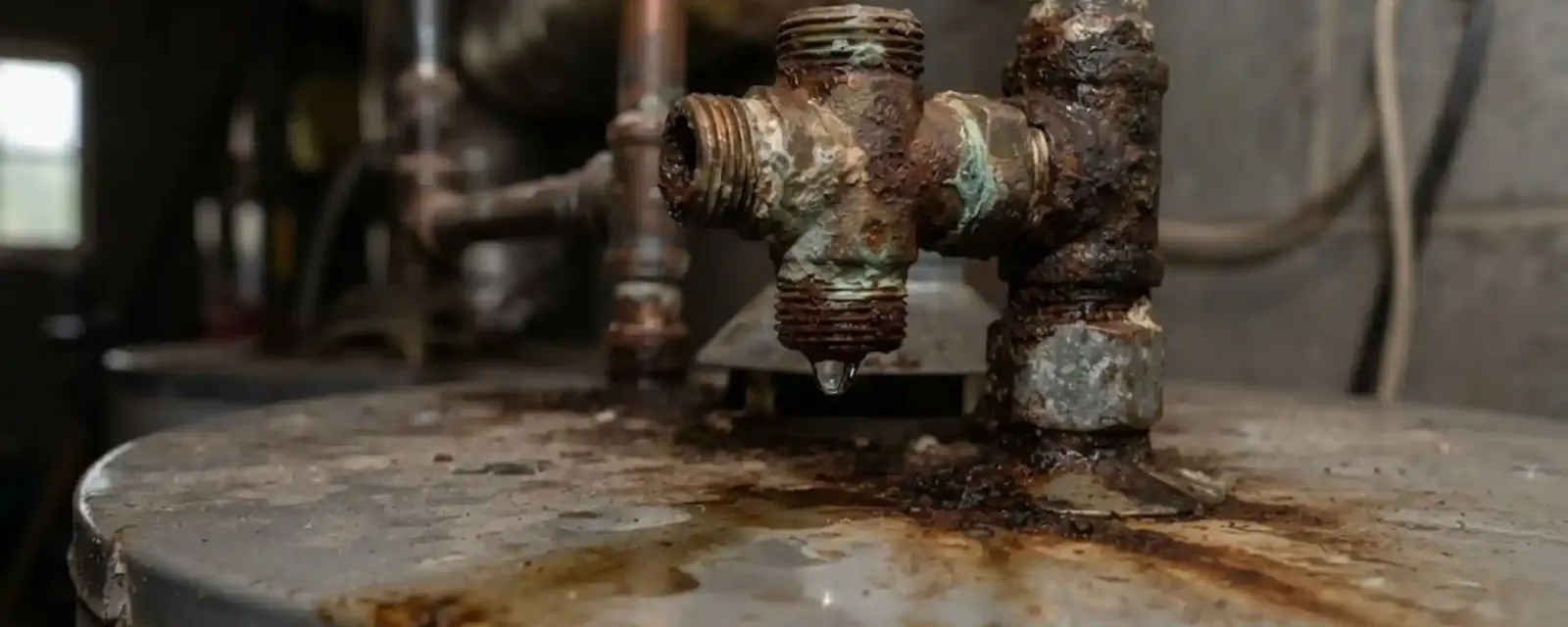
An anode rod is a metal rod inside a tank water heater that corrodes so the steel tank does not. Most manufacturers and plumbers suggest checking it every two to three years and replacing it once the steel core shows or the rod is thinner than a pencil. A fresh rod can add years to a tank, and a spent one lets rust start on the tank walls.
Replacing a rod is a modest job when the fittings cooperate, and a stubborn one when they do not. This guide covers how the rod works, how to inspect it, the rod types, and when it makes more sense to replace the whole heater. If your tank is already leaking, skip ahead to our water heater replacement page.
What the anode rod actually does
Water is slightly corrosive to steel. The rod is made of a more reactive metal, usually magnesium or aluminum, so it gives up its material first. This is called sacrificial protection.
The rod hangs from the top of the tank and reaches nearly to the bottom. As it corrodes, it sheds particles, and when it is gone the tank lining and steel take over the job. Rust-colored water, a smell of rotten eggs or a popping tank are all reasons to look at the rod.
How to tell if the rod is spent, and when to call
A plumber pulls the rod and looks at it. You can do the same if you are comfortable shutting off the power or gas, closing the cold supply and draining a few gallons. A rod that still looks like a fat metal stick has life left.
- The steel core wire is visible along more than six inches of the rod.
- The rod is thinner than about a half inch along most of its length.
- Chunks of the coating are missing or the rod is coated in hard white scale.
- The rod has not been checked in more than three years.
- The water has started to smell or look discolored.
If the rod is in good shape, put it back with fresh thread sealant, restore the water, refill the tank before turning the power back on, and write the date on the tank for next time.
Rod types and when each fits
| Rod type | Best use | Watch for |
|---|---|---|
| Magnesium | Most homes on typical water | Wears faster, can smell on some water |
| Aluminum | Water that makes magnesium wear very fast | Check the manufacturer warranty language first |
| Aluminum with zinc | Water that has a sulfur smell | Reduces but may not remove the smell |
| Powered anode | Hard-to-reach tanks, tight ceilings | Needs an outlet, costs more |
Which rod is right depends on your water chemistry and your tank's warranty terms. A plumber who knows your tank can match the rod. Do not pick a rod from a store shelf without checking the label on your heater.
Why the job can be hard
The rod hex head is usually 1-1/16 inch and sits on top of the tank, sometimes under a plastic cap. Rods installed years ago can be seized in place by corrosion. A long breaker bar or an impact wrench is often needed.
A rigid rod can be about three to four feet long, so you need that much clearance above the tank, or a flexible rod that bends. In a low closet or beneath a finished ceiling a flexible or segmented rod is the usual answer.
If the hex head rounds off or the tank threads strip, stop. Forcing it risks cracking the tank, and at that point an anode rod replacement is no longer the right fix.
Rod swap or new water heater?
A new rod buys time only if the tank is sound. If the heater is more than about ten years old, shows rust at the base or has a damp floor underneath, a rod will not save it. Leaks around the tank bottom mean the steel has failed.
Swap the rod
The tank is under ten years old, dry underneath and still heats evenly. A rod costs far less than a heater.
Flush and swap
Sediment is building up. Draining the tank while the rod is out improves efficiency and gets rid of rattling.
Replace the heater
The tank leaks, the rod threads are stripped or the tank is past its expected life. See water heater repair for the checks we run first.
Consider tankless
A rod does nothing for a tankless unit. If you are rethinking the system, see tankless water heater options.
What anode rod service costs
A clear price comes first, and for an anode job it moves with a few details:
- The rod type and length your tank needs.
- Overhead clearance and whether a flexible rod is needed.
- Whether the old rod is seized and needs extra time to remove.
- Whether a tank flush is added at the same visit.
- Whether the visit is after hours.
Insurance does not usually pay for maintenance like a rod replacement. A sudden tank failure that floods a floor is a different story, so read your policy. For a real number, call (603) 815-9179.
Londonderry, NH note: town water, wells and your rod
Many Londonderry households draw from private wells, and the water can differ from house to house. No single hardness figure applies across town, so test your tap and check your result before choosing a rod. If you are on town water, ask your water utility for its annual water quality report.
Well owners in the area have been advised to test for PFAS and other contaminants through the New Hampshire Department of Environmental Services programs. Those tests do not choose your rod, but they tell you what is in the water your heater holds, and a plumber can match the rod to the chemistry you find.
The relief valve and discharge pipe on any tank follow the International Plumbing Code (IPC).
Questions we hear in Londonderry
Check it every two to three years and replace it when the steel core shows or the rod is much thinner than when it was new. Rods last longer on gentle water and wear faster on aggressive water.
Many homeowners can, but the fitting may be seized and electric or gas supply must be off. If it will not budge, call a plumber instead of forcing it.
No. A rod slows corrosion and cannot repair a tank that has already rusted through. A leak from the tank means replacement.
Bacteria can react with a magnesium or aluminum rod and produce a sulfur smell. A zinc-aluminum rod or a tank flush can help. It is worth testing your tap too, especially on well water.
It can. Because well water in town varies by property, test your tap and tell the plumber what you find. Do not guess based on a neighbor's water.
No, it is planned maintenance. If the tank is leaking or you have no hot water, call the 24/7 line at (603) 815-9179 and we can look at it the same day when the schedule allows.
We service water heaters across Londonderry and in Windham and Litchfield, where private wells are common. If a rod check turns up something worse, our crew can move straight to water heater installation on the same visit when the schedule allows.