A backed-up drain is an emergency when water is rising toward the floor, when more than one fixture is gurgling, or when sewage smell fills a room. Our 24/7 line is staffed at night and on weekends, and a licensed plumber can be dispatched to your Londonderry home the same day when schedules allow.
While you wait, stop running water in the house, keep the washing machine and dishwasher off, and move rugs and stored boxes away from low drains. Please do not pour acid cleaners into a standing clog. They sit on the blockage, and they burn the next person who opens the pipe.
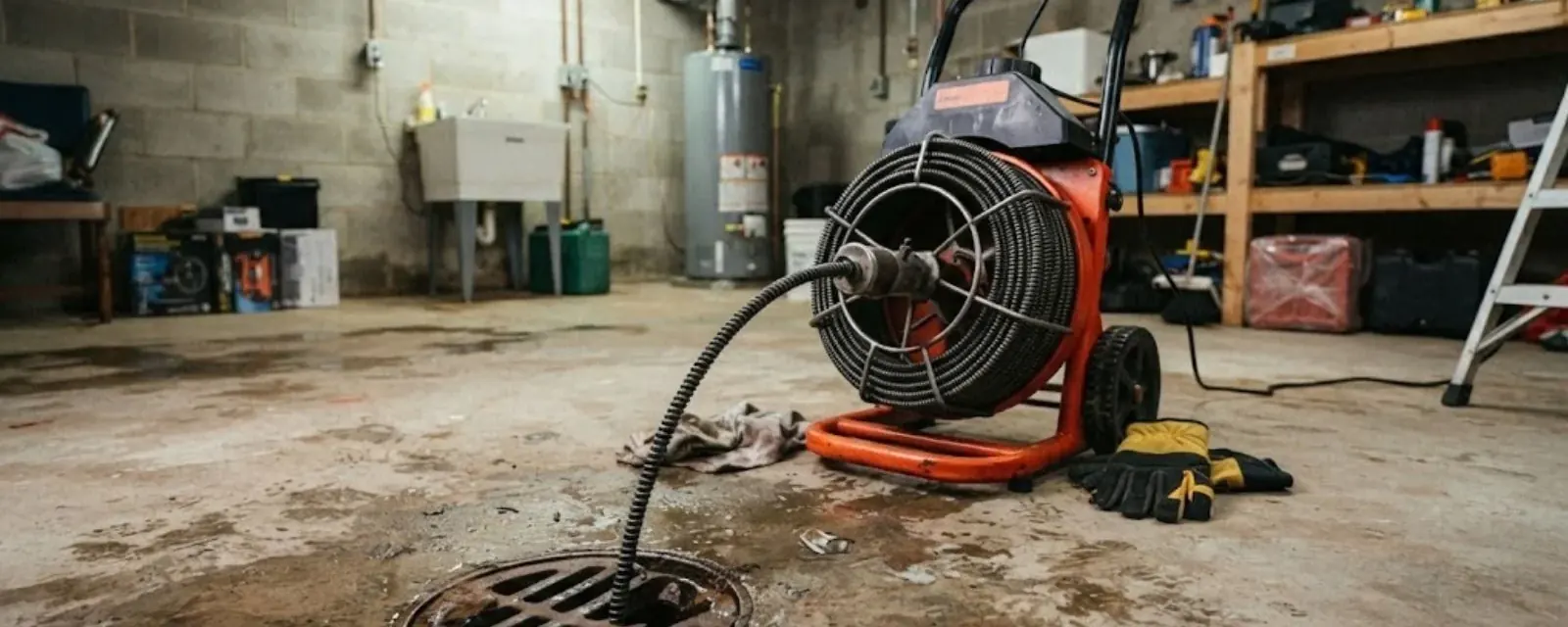
Drain cleaning means clearing the blockage and finding out why it formed. We use hand augers, motorized cables and drain cameras to do both, and we explain what we find before any larger repair is discussed.
When a clogged drain is an emergency
Most single-fixture clogs can wait for a morning appointment. A slow bathroom sink is a nuisance, not a flood. Some signs mean the problem is deeper in the line and should be treated as urgent.
- Water or sewage backs up into a tub, shower or floor drain when you flush a toilet or run the washer.
- Two or more fixtures on different floors gurgle or drain slowly at the same time.
- A sewer gas smell appears near a drain, or the basement floor drain is overflowing.
- A kitchen sink backs up into the dishwasher or the other basin and stays full.
- Nobody in the house can shower, wash dishes or do laundry without water coming back up.
If sewage is entering living space, keep children and pets away from it and ventilate the room. Call the 24/7 line at (603) 815-9179 and tell the dispatcher which fixtures are affected. That detail tells us whether we are likely dealing with a branch line or the main drain.
How we clear a drain: snaking, cabling and jetting
The right tool depends on where the blockage sits and what it is made of. A hand auger reaches a sink trap or a few feet of branch line. A motorized cable reaches farther and cuts through roots, scale and packed grease.
When a cable only punches a hole through the clog, the drain flows for a few days and then slows again. In that case we recommend hydro jetting, which scours the pipe wall with high-pressure water. We also run a drain camera when the same drain has clogged more than once, so you can see the pipe condition on the screen.
| Symptom | Likely location | Usual first tool |
|---|---|---|
| One sink or tub drains slowly | Trap or branch line, 2 to 15 feet in | Hand auger or small drum machine |
| Kitchen sink and dishwasher back up | Kitchen branch line, grease buildup | Cable with grease cutting head |
| Several fixtures gurgle together | Main building drain | Large cable, then camera |
| Basement floor drain overflows | Main drain or sewer connection | Cable and camera, possible jetting |
| Drain clears, then slows within weeks | Root growth or scale in the pipe | Camera, then hydro jetting |
Kitchen sink clogs
Kitchen drains clog differently from bathroom drains. Cooking grease cools inside the pipe and gathers food scraps until a 1.5 inch line has the flow of a straw. Garbage disposals push that material farther down the line instead of removing it.
If the kitchen sink and the dishwasher both stand full, the blockage is past the point where they join. We clear it with a cable, flush the line with hot water, and check the disposal outlet. A worn disposal can leak into the cabinet, and we cover that on our garbage disposal repair page.
Kitchen clogs return when grease keeps going down the drain. Wipe pans with a paper towel before washing, and keep coffee grounds out of the sink. Those two habits do more than any drain additive.
Tubs, showers, washing machines and floor drains
Hair and soap film form most tub and shower clogs, and they sit within a few feet of the drain opening. A washing machine standpipe backs up when lint and detergent residue narrow the pipe, and the overflow often shows up on a laundry room floor.
Basement floor drains are different. They connect to the main drain, so an overflowing floor drain usually points to the main line and not to the drain itself. If a drain pan or floor drain fills during a storm or after laundry day, call us before the water reaches stored items.
A drain that leaks instead of clogs is a separate problem. A damp ceiling under a bathroom or a wet crawlspace wall can mean a cracked drain line. We trace that with a camera and a moisture check before any pipe is cut. Our leak detection service covers pressure leaks and drain leaks alike.
Why drains clog in Londonderry homes
Londonderry homes drain two different ways. Some properties connect to a town sewer main, and others use a septic tank and leach field. If you are not sure which system serves your street, Public Works can tell you at 603-432-1100, extension 460.
That difference matters for a clog. On a sewer connection, a blockage can sit in your private line or in the street main, and a camera shows which. On a septic system, repeated backups can mean a full tank or a damaged baffle, and a cable alone will not fix it. We tell you honestly when the next step is a septic pumper and not another drain visit.
Mature trees are the other common cause. Roots enter pipe joints looking for moisture and grow into a mat that catches paper and grease. A camera pass shows the joint, and our sewer line cleaning page explains how we cut roots out of a main line.
What drain cleaning costs
The price is set before the cable goes in. It moves up or down with these factors:
- How far into the line the blockage sits, and whether a cleanout is available.
- The pipe size and material, since a 4 inch cast iron main needs different equipment than a 1.5 inch kitchen branch.
- Whether a camera inspection is needed to find the cause.
- Whether hydro jetting is needed on top of cabling.
- Whether the visit is after hours, on a weekend or on a holiday.
Homeowners insurance usually does not pay to clear a clog, though some policies cover the sudden water damage that follows a backup. Read your policy or ask your agent before you file. For your actual number, call (603) 815-9179 and describe the drain.
Drain cleaning across Londonderry and nearby towns
We dispatch from Londonderry to every neighborhood in town, including North Londonderry, Wilson and the Woodmont Commons area. Newer construction and older homes clog for different reasons, and we match the tool to the pipe.
We also clear drains in Derry, Windham, Hudson, Manchester and Litchfield. If a toilet is the fixture that will not clear, see our toilet repair page, and for a line that keeps failing, a sewer camera inspection shows the cause.
Drain and vent layouts are governed by the International Plumbing Code (IPC), which is why a cleanout and a proper trap matter as much as the cable.
Questions we hear in Londonderry
Yes. Backups often start at night, and (603) 815-9179 is staffed then. Say which fixtures are backing up and whether sewage is on the floor, and a same-day visit is offered when the schedule allows.
A repeat clog usually means the cause is still in the pipe. Grease, roots, scale or a sagging section of line can all hold debris. A camera inspection shows which one, and hydro jetting often clears what a cable leaves behind.
We advise against it. Chemical cleaners rarely clear a full blockage, and the caustic liquid that sits in the pipe is a hazard when a plumber opens it. Use a plunger or call us instead.
It points to a clog in the kitchen branch line past the dishwasher connection. Stop using both appliances and call. A cable with a grease cutting head usually clears it, and we check the disposal outlet at the same time.
A camera answers that. If the blockage is in your private line, we clear it. If it is in the street main, the town sewer system is responsible, and we point you to Londonderry Public Works at 603-432-1100, extension 460.
Look for a sewer bill from the town or a septic tank lid in the yard, or ask Public Works. Tell the dispatcher what you know. If you are unsure, say so, and the plumber will check on site.