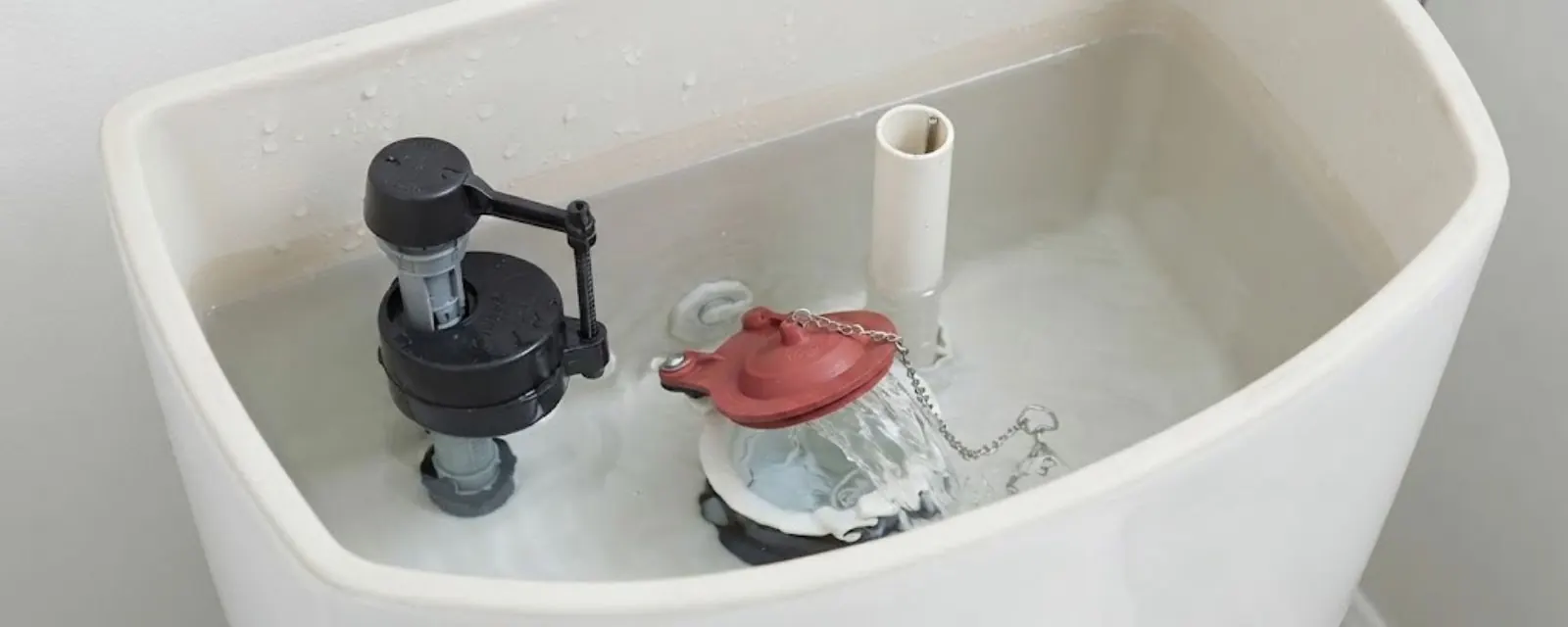
A toilet can leak from the tank, the supply line, the base or the flush valve. The part that fails sets the price. A worn flapper is a small job, while a damaged flange under the floor is a larger one.
We do not post one flat price because there is no single toilet leak. This guide explains the cost drivers, the difference between a repair and a replacement, and the questions that keep a quote honest.
Where the leak is decides the price
| Leak location | Typical cause | Cost level |
|---|---|---|
| Inside the tank, into the bowl | Worn flapper or flush valve seat | Low |
| Tank refills constantly | Failing fill valve | Low |
| Between tank and bowl | Tank bolts or gasket | Low to moderate |
| At the supply connection | Supply line or shutoff valve | Low to moderate |
| Around the base of the bowl | Wax ring or flange | Moderate |
| Under the floor or from a crack | Damaged flange or porcelain crack | Moderate to high |
These levels are relative, not dollar amounts. A plumber who looks at your toilet can place it on the scale in minutes. A flange repair costs more than parts because the toilet must be pulled and the floor may need work.
Tank leaks: usually the cheapest repair
A silent leak from the tank to the bowl is the most common kind. The flapper warps and lets water trickle past, and the fill valve tops up the tank every few minutes. A new flapper or fill valve costs very little in parts, and the labor is short.
Leaks at the tank bolts or the tank-to-bowl gasket are slightly bigger jobs because the tank has to come off. If the tank is cracked, the toilet must be replaced. We explain the steps for the common parts in our toilet repair work on the toilet repair page.
Base leaks: wax rings and flanges
Water at the base of a toilet means the seal between the bowl and the drain flange has failed. A wax ring or foam seal costs little, but pulling the toilet, cleaning the flange and resetting the bowl takes time. A rocking toilet is a warning, because movement breaks the seal.
If the flange is corroded or cracked, it needs a repair ring or a new flange, and the subfloor may be soft. That is when a leak turns from an hour job to a half day. Do not ignore water at the base. It rots the floor slowly, and that damage costs far more than the seal.
Repair or replace the toilet?
- Repair when the porcelain is sound, the toilet flushes well and the parts are standard.
- Replace when the bowl or tank is cracked, the toilet is very old and clogs repeatedly, or the flange work would cost close to a new unit.
- Replace when a new toilet is part of a bathroom update and the old one is already failing.
A new toilet adds the fixture price to the labor. A modern toilet also uses less water per flush than an older one. We will compare the numbers on site and tell you which choice makes sense.
What raises the total
- Rusted shutoff valves that must be replaced before the toilet can be pulled.
- Water damage under the toilet that needs a floor repair.
- Evening, weekend or holiday service.
- A toilet that is hard to move or in a tight space.
- A second problem such as a slow drain, which may need drain cleaning.
Ask the plumber to list the parts and the labor separately. Ask whether the old shutoff valve will be replaced. A clear quote before work starts is part of how we work, and you can request it by calling (603) 815-9179.
Questions to ask before you approve the work
- Where exactly is the leak, and how did you confirm it?
- Which parts are you replacing, and are they included in the price?
- Will the shutoff valve and supply line be replaced too?
- Is the floor around the toilet sound, or does it need repair?
- What happens if you find a second problem once the toilet is lifted?
A plumber who can answer these before starting the job is easier to trust. Ask for the answers in writing if the repair is more than a simple part swap. That habit protects you from surprise charges, and it takes a minute.
Londonderry, NH note: water source and repair life
Toilet parts wear faster in some water than in others. Londonderry has a mix of town water and private wells, and no single hardness number covers every address. Test your tap and read the results before you decide that a repair is a one-off.
If you plan to replace fixtures or move piping, the town's Building and Zoning Enforcement staff can tell you whether a permit applies. Their number is 603-432-1100, extension 440. For a leak that keeps coming back, we also serve Derry and Windham with the same clear pricing.
How we price toilet leak repairs
A toilet leak bill follows the cause, and you see the number before we begin. Four things move it:
- Which part leaks and how many parts are involved.
- Whether the toilet must be pulled and reset.
- Condition of the shutoff valve, supply line and flange.
- Time of day.
Insurance rarely covers a worn seal, though it may cover a sudden overflow that damages a room. Call (603) 815-9179 for a number tied to your toilet.
A toilet reset should meet the International Plumbing Code (IPC) for the flange and the trap.
Questions we hear in Londonderry
A steady leak on the floor or an overflow is an emergency. Close the supply valve and call. A slow tank leak can wait for a daytime visit.
That points to the base seal. Water escapes past the wax ring or the flange when the bowl drains. Stop using the toilet until it is reset.
A cracked tank cannot be reliably repaired. The tank or the whole toilet is replaced.
Dry the supply line and the connection with a paper towel, then watch. Drips from the connection are supply side. Water in the bowl with a clear base points to the tank.
The town decides, and Building and Zoning Enforcement answers permit questions on 603-432-1100, extension 440.