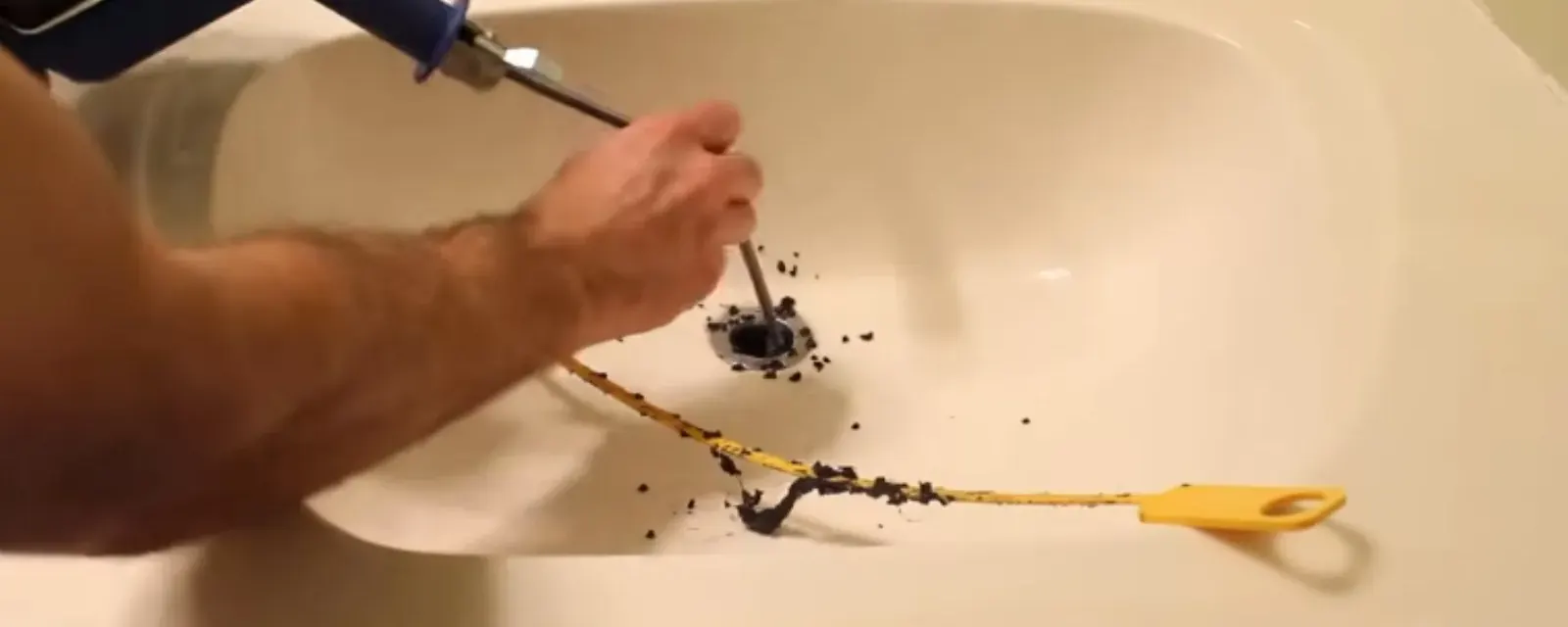
Acid drain cleaners are strong chemicals, often based on sulfuric acid, that eat through hair, grease and soap scum. They can work on a stubborn clog in a metal pipe, and they can also do real harm. They heat up as they react, they can damage some plastic and old metal pipes, and they leave a caustic liquid in the drain that is dangerous to touch.
For most homes there is a safer way to clear a drain. This guide explains how acid cleaners behave, when to avoid them completely, and the steps to try first. If a clog has already backed up into living space, skip the experiments and call our 24/7 line at (603) 815-9179 for drain cleaning.
What acid cleaners actually do
Concentrated acid dissolves organic matter such as hair and paper, and it can soften grease. The reaction produces heat. In a drain that is blocked completely, the product sits in one spot and attacks the pipe around the clog.
That is the main problem. A drain cleaner works best when water can flow through it. In a fully blocked line, the liquid has nowhere to go, so it stays on the clog and the pipe wall until someone removes it. A plumber opening that trap later can get splashed.
When you should never use acid
- The sink or tub is completely stopped and water is standing in it.
- The pipes are PVC, ABS or other plastic, which can soften or warp under heat.
- The pipes are old galvanized steel or thin cast iron that may already be corroded.
- The home uses a septic system. Strong chemicals can disturb the bacteria the tank depends on.
- A toilet is clogged. Heat and chemicals can crack porcelain and put hot liquid close to your face.
- You have already used another cleaner. Mixing chemicals can release toxic gas.
Never mix drain cleaners, bleach or ammonia. If you smell fumes, leave the room, open windows and call poison control at 1-800-222-1222. Call 911 if anyone has trouble breathing.
Safer steps to try first
- PlungeA cup plunger clears a sink and a flange plunger clears a toilet. Seal the overflow opening with a wet rag when you plunge a sink or tub.
- Remove and clean the trapPlace a bucket under the P-trap, unscrew the slip nuts and clear the trap by hand. Wear gloves.
- Use a hand augerA small drain auger reaches a few feet past the trap and pulls out hair. Turn the handle slowly to avoid scratching the pipe.
- Flush with hot tap waterAfter clearing the clog, run hot tap water for a minute. Do not pour boiling water into plastic pipes or a cracked bowl.
- Know when to stopIf the clog is more than one fixture, comes back within days or gurgles in another drain, stop and call. The problem is deeper than a trap.
These steps take about half an hour and cost a few dollars in tools. They also teach you what is in the drain, which helps the plumber if you do need to call.
Acid versus the alternatives
| Method | Works best on | Main risk |
|---|---|---|
| Acid cleaner | Hair and paper in metal pipe | Heat, fumes, burns, pipe damage |
| Caustic cleaner (lye) | Grease and soap | Skin and eye burns, can harden in the pipe |
| Enzyme cleaner | Slow drains, maintenance | Slow and weak on a full clog |
| Plunger | Sink, tub and toilet clogs | Needs a good seal |
| Hand auger | Hair and trap-level clogs | Can scratch pipe if rushed |
| Professional cable or jetting | Deep and repeat clogs | Needs the right pipe and tool |
A repeat clog usually has a physical cause such as grease buildup, roots or a sagging line, and chemicals do not fix those. For repeat clogs, our hydro jetting service cleans the pipe wall, and a camera shows what is behind the blockage.
What to tell the plumber
If you used any cleaner, tell the plumber what it was and when. A drain with chemical in it needs gloves, goggles and care. It also changes how the clog is opened, because a trap full of acid should be neutralized and emptied before a cable goes in.
Keep the product label and the bottle if you can. It lists the ingredients and the first-aid steps, and it helps the plumber choose the right protective gear.
What clog clearing costs
Clearing a clog the safe way is quoted up front. The number depends on:
- How far into the line the clog sits and which fixture it affects.
- Whether chemicals are present and the trap needs safe emptying first.
- Pipe material and size.
- Whether a camera is used to find the cause.
- After-hours or weekend dispatch.
Homeowners insurance usually does not pay to clear a clog. Chemical injury or damage from a cleaner is a separate matter, so read your policy. For a real number, call (603) 815-9179.
Londonderry, NH note: sewer, septic and wells
Your street may have a town sewer main, or your house may rely on a septic system. To confirm which applies, call Public Works at 603-432-1100, extension 460. If you are on septic, avoid strong chemicals that can disturb the tank.
Many Londonderry households also draw from private wells. If you have used a heavy dose of cleaner and wonder about your water, test your tap, and ask the New Hampshire Department of Environmental Services about its programs that help private well owners test and treat their water.
Replacement drain pipe after chemical damage should meet the International Plumbing Code (IPC) for approved materials.
Questions we hear in Londonderry
They can damage some pipes, especially plastic and old metal, and they are hazardous to skin and eyes. Use them only as the label directs and never in a fully blocked drain.
A plunger, a hand auger and a cleaned trap solve most single-fixture clogs. A professional cable or jetting clears deeper and repeat clogs.
No. The heat can crack porcelain and liquid can splash back. Use a flange plunger or a closet auger, or call for toilet service.
Do not add more. Tell the plumber what you used and keep the label. The trap may hold concentrated product, so it must be handled with gloves and goggles.
A single slow sink can wait. Backups into tubs or floor drains, or several fixtures gurgling at once, are urgent. Call the 24/7 line at (603) 815-9179.
Strong chemicals can disturb the tank's bacteria and are best avoided. Ask your plumber about safer options, and ask Londonderry Public Works if you are unsure whether you have sewer or septic.
We clear drains across Londonderry and in Derry and Windham. If the clog turns out to be a cracked fixture or a leak, our toilet repair and faucet repair pages explain what we can fix on the spot.