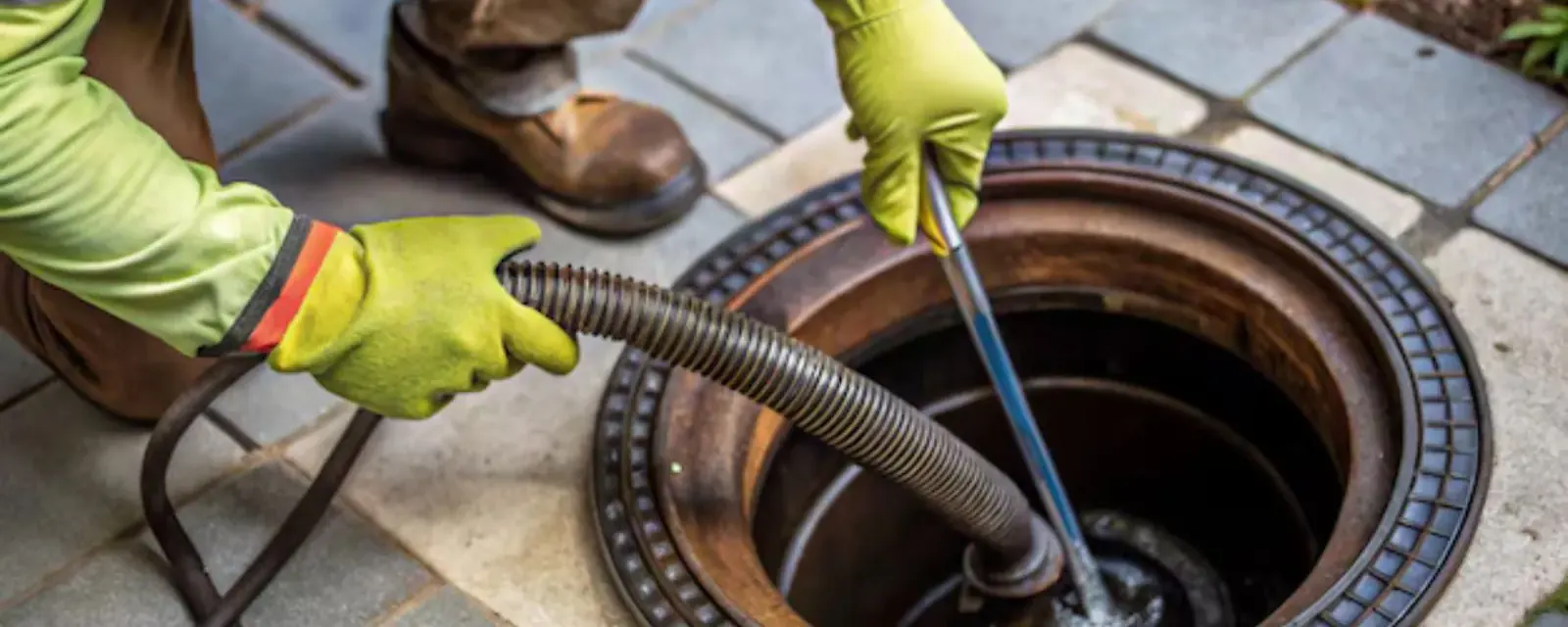
Hydro jetting sends water at very high pressure through a hose and a nozzle inside a drain or sewer pipe. The nozzle blasts grease, scale and roots off the pipe wall, and the water flushes the debris downstream. Unlike a cable that punches a hole through a clog, jetting cleans the full circle of the pipe.
That makes it the better tool for repeat clogs, grease buildup and root regrowth. It also makes it the wrong tool for a fragile or collapsed pipe. This guide explains how the process works, what a good contractor checks first, and the questions to ask. If you want the service itself, see our hydro jetting page.
Jetting versus snaking
A drain snake or cable is a rotating steel line with a cutting head. It is quick and works well on a single soft clog. It leaves a thin channel through the middle of the blockage, and the rest of the buildup stays on the pipe wall.
Jetting is slower to set up and removes far more material. If a drain slows again a few weeks after a cable visit, the line probably needs jetting. Our drain cleaning team starts with a cable for most single-fixture clogs and moves to jetting when the camera shows buildup.
| Question | Cable or snake | Hydro jetting |
|---|---|---|
| Best for | One soft clog, hair, paper | Grease, scale, root regrowth |
| Cleans pipe wall | Partly | Fully |
| Speed | Fast | Takes longer to set up |
| Risk to old pipe | Low | Higher on weak pipe |
| Repeat clogs | Often return | Last longer when the cause is buildup |
What a jetting visit looks like
- Camera firstA drain camera shows the pipe material, the clog and any cracks, offsets or collapsed sections before water pressure is used.
- Access pointThe hose enters through a cleanout, a removed toilet or a vent. A cleanout makes the job faster and safer.
- Cut and flushThe nozzle pushes forward cutting the buildup, then pulls back flushing it toward the sewer or tank.
- Second camera passA second look confirms the pipe is clean and notes any defects the buildup was hiding.
- ReportYou get an explanation of what was found and whether the line needs repair, lining or just a maintenance schedule.
When to skip jetting
High-pressure water can damage a pipe that is already failing. Cast iron with thin walls, clay pipe with broken joints and any pipe with a collapse or a major offset are poor candidates. In these cases, jetting can blow out a weak section and flood a basement or yard.
That is why the camera comes first. If the pipe is not strong enough, a good contractor will tell you so and suggest a gentler cleaning, a spot repair or a sewer line repair plan instead.
Questions to ask before you book
What pressure will you use, and does it suit my pipe material and age?
Will you run a camera before and after?
Where does the debris go, and is my line connected to a sewer or a septic tank?
What happens if the camera finds damage?
Signs your line may be ready for jetting
- A kitchen drain clears with a cable and slows again within weeks.
- Several fixtures gurgle or back up at once.
- A restaurant, laundry or home with heavy cooking has frequent grease clogs.
- A camera shows roots, scale or a thick coating inside the pipe.
- The main line has been cabled more than once in a year.
If any of these sound familiar, ask for a camera inspection first. Our sewer inspection service documents the pipe so you can decide with real information.
What hydro jetting costs
Jetting is priced before the hose goes in. What moves that price:
- Pipe length and diameter, and how many access points exist.
- How heavy the buildup is and how many passes are needed.
- Camera inspection before and after.
- Whether a cleanout must be installed first.
- After-hours or emergency dispatch.
Homeowners insurance generally treats cleaning as maintenance and does not cover it, though some policies pay for sudden backup damage. Read your policy. For a real number, call (603) 815-9179 and describe the clog.
Londonderry, NH note: sewer or septic changes the plan
Some Londonderry properties connect to a town sewer main, and properties without one use a septic system. Not sure which one you have? Public Works answers sewer questions at 603-432-1100, extension 460.
This matters for jetting because the debris has to go somewhere. On a sewer connection it moves down the line. On a septic system, flushing a heavy load of grease and roots into the tank can overload it. Ask your plumber where the debris will end up, and whether the tank should be pumped first.
Cleanout access is part of drain layout under the International Plumbing Code (IPC), which matters for jetting.
Questions we hear in Londonderry
It depends on the pipe. Sound cast iron, PVC and ABS handle it well. Cracked, collapsed or very thin pipe may not. A camera check tells you which one you have.
Only when the cause of clogs is buildup. A line with heavy grease or roots may need yearly attention, while a clean line may never need it.
Backups are urgent, and our 24/7 line at (603) 815-9179 takes calls day and night. A planned jetting to prevent repeat clogs can be scheduled normally.
It cuts roots out of the pipe and flushes the pieces. Roots usually return if the joint they enter is still open, so ask about lining or repair if the camera shows a cracked joint.
Rental jetters are available, but they lack the pressure and training for sewer lines. A mistake can drive debris into the house or cut your skin. We recommend leaving it to a trained crew.
Tell them whether your home uses town sewer, a septic tank or you are not sure. They will adjust the plan, and if a tank is involved, they may suggest pumping it before any heavy cleaning.
We serve Londonderry and nearby towns, including Hudson and Manchester. When a main line is clogged and the house is backing up, sewer line cleaning is the fastest way to restore flow.