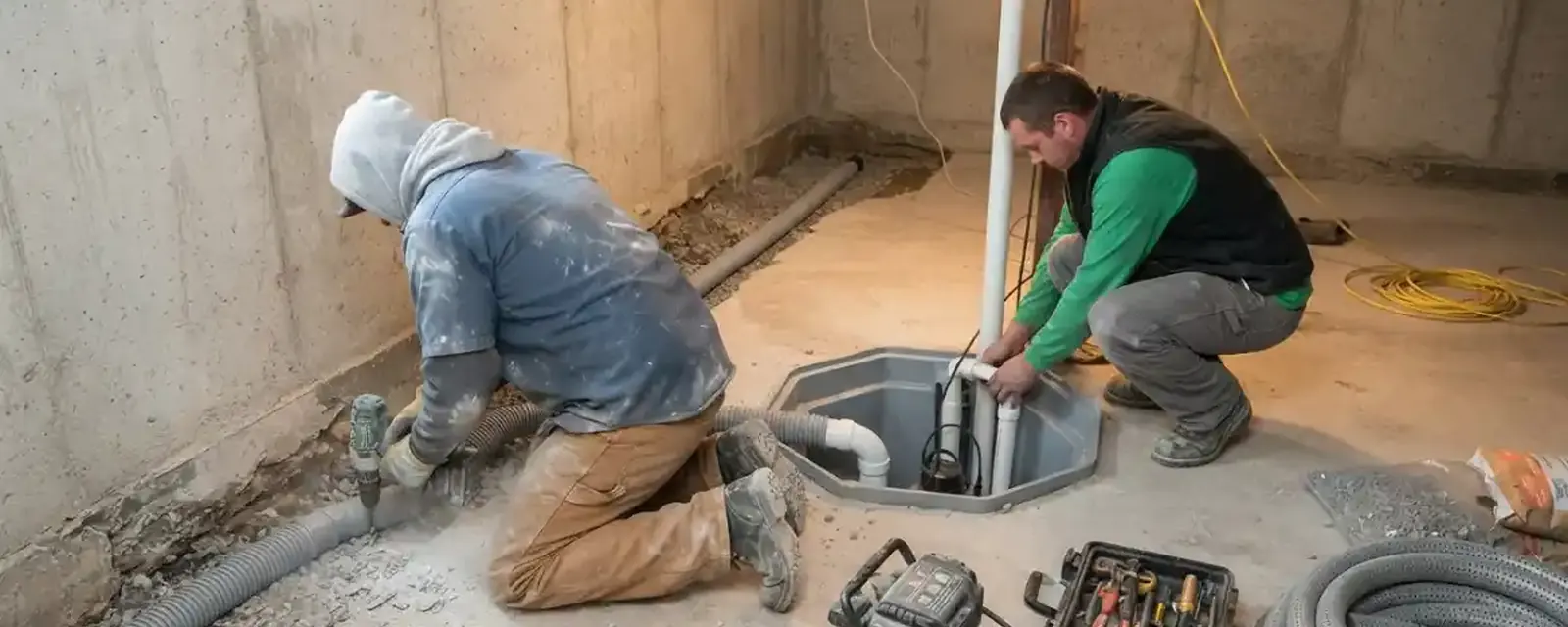
A basement waterproofing system is any set of measures that keeps groundwater and runoff out of a basement or moves it away before it floods the floor. Common systems include interior drain channels with a sump pump, exterior membrane and drain tile, and surface fixes like grading and gutters. The right choice depends on where the water comes from.
Before spending on any system, rule out a plumbing leak. A cracked supply line, a failed water heater or a leaking drain can look exactly like groundwater. Our plumbers can run a pressure and meter test through our leak detection service, and if a pump is part of the answer, our plumbing installation team can handle the plumbing side.
Step one: find where the water comes from
Water in a basement has only a handful of sources. Matching the pattern to the cause saves money.
| What you see | Likely source | First step |
|---|---|---|
| Wet only after rain or snowmelt | Groundwater or surface runoff | Check gutters, downspouts and grading |
| Damp along the floor and wall joint | Hydrostatic pressure at the footing | Consider interior drainage |
| Wet in dry weather | Plumbing leak or condensation | Test the water meter with fixtures off |
| Water at the floor drain | Main drain backup | Call for drain cleaning and a camera |
| Wet around the water heater | Tank or fitting leak | Shut off supply and call |
| Wall wet beneath a bathroom | Drain or supply leak above | Find the source before waterproofing |
To test the meter, shut off every fixture, note the reading, wait an hour and check again. Any movement means water is escaping somewhere in the plumbing. If the meter holds still, groundwater is the better suspect.
Waterproofing systems compared
Surface fixes
Gutters that discharge away from the house, downspout extensions and soil sloping away from the foundation. They cost the least and often solve half the problem.
Interior drain and sump
A channel along the footing collects water and routes it to a sump pit. It handles water that is already under the slab and works year round.
Exterior membrane and drain tile
The foundation wall is excavated, sealed and given a perimeter drain. It stops water at the wall but is the most disruptive and costly.
Crack injection and sealant
Epoxy or polyurethane fills a single crack. It helps a localized leak and will not cure a high water table.
Sump pump with backup
A pit and pump move water out of the basement. A battery backup protects against outages.
Dehumidifier and vapor control
Humidity is not the same as water entry. A dehumidifier helps a damp basement and does nothing for a flood.
Most homes need a combination. A grading fix plus an interior drain and a pump is common. Ask any contractor to explain why each piece is included, and for the water source they believe each one addresses.
Warning signs worth acting on
- White chalky deposits on the wall, called efflorescence, mean water is passing through the masonry.
- A horizontal crack in a block wall can mean soil pressure and needs a structural look.
- Mold or a musty smell that returns after cleaning points to ongoing moisture.
- Peeling paint or bubbling floor coatings show moisture coming through the slab.
- Rust on appliance feet or the bottom of the furnace means water has been standing.
A horizontal wall crack or a bowing wall is a structural issue, not a plumbing one. Have a structural engineer or foundation contractor look at it. We can help rule plumbing in or out, and we will tell you if the evidence points outside our trade.
What to do the day the basement floods
If water is rising, safety comes first. Do not enter standing water if the electrical panel or outlets may be wet. Shut off power to the basement from a dry spot, and call an electrician if the panel is under water.
- Shut off supply if a pipe is the sourceClose the main water valve and call our 24/7 line at (603) 815-9179.
- Protect the heater and electricKeep out of water near outlets, the panel or the furnace.
- Move belongings upLift boxes and furniture onto shelves or tables and remove what can be saved.
- Pump or bailA wet vacuum or a utility pump removes standing water. Do not run a gas engine indoors.
- Document the damageTake photos and notes for insurance before cleanup.
What basement water work costs
Any plumbing portion of a waterproofing job is priced before we start. Waterproofing work in general is driven by:
- The water source and how much of the perimeter is affected.
- Interior or exterior access, since digging around a foundation is much larger than working inside.
- Whether a pit, pump, backup and discharge line are included.
- Slab cutting, concrete patching and finishing.
- Finished basement walls or flooring that must be removed.
Homeowners insurance usually excludes groundwater seepage and may cover sudden pipe bursts. Read your policy before you file. For plumbing diagnosis, call (603) 815-9179.
Londonderry, NH note: slope, brooks and permits
Londonderry's highest point is 535 feet on Number Eight Hill, and brooks drain the town toward the Merrimack River. Beaver Brook drains the east and south, and Little Cohas, Watts, Colby and Nesenkeag Brooks drain the west. Homes on a slope or near one of these brooks may see more runoff, so check how water moves across your lot after a storm.
Digging, a new pump circuit or a drainage change near a lot line may need a permit, and the Building and Zoning Enforcement desk (603-432-1100, extension 440) can say which. If you rely on a private well, mention it to any contractor so excavation does not threaten the well or its lines.
Plumbing portions of a waterproofing job, such as a sump discharge, follow the International Plumbing Code (IPC).
Questions we hear in Londonderry
Run the meter test. Turn off all fixtures, record the meter, wait an hour and read it again. Any movement points to a leak, and our leak detection team can find it.
A pump removes water that collects in a pit. It does not stop water from entering the foundation. Most systems pair a pump with interior drains or exterior work.
Interior systems are less disruptive and handle water under the slab. Exterior work stops water at the wall but costs more and involves digging. The right pick depends on the cause.
Sealant slows moisture vapor and fills small cracks. It cannot hold back water under pressure, so a high water table needs drainage.
Shut off the main water valve and call the 24/7 line at (603) 815-9179. Burst pipes are a plumbing emergency and a plumber can usually be scheduled the same day when the schedule allows.
It can. Wells, pressure tanks and lines can sit near foundation walls, so tell any contractor where they are. If water stands near the well, test your tap afterward.
We help homeowners across Londonderry and in Litchfield and Manchester sort out wet basement causes. When the answer is a failed pipe, our burst pipe repair crew can shut off and repair it quickly.